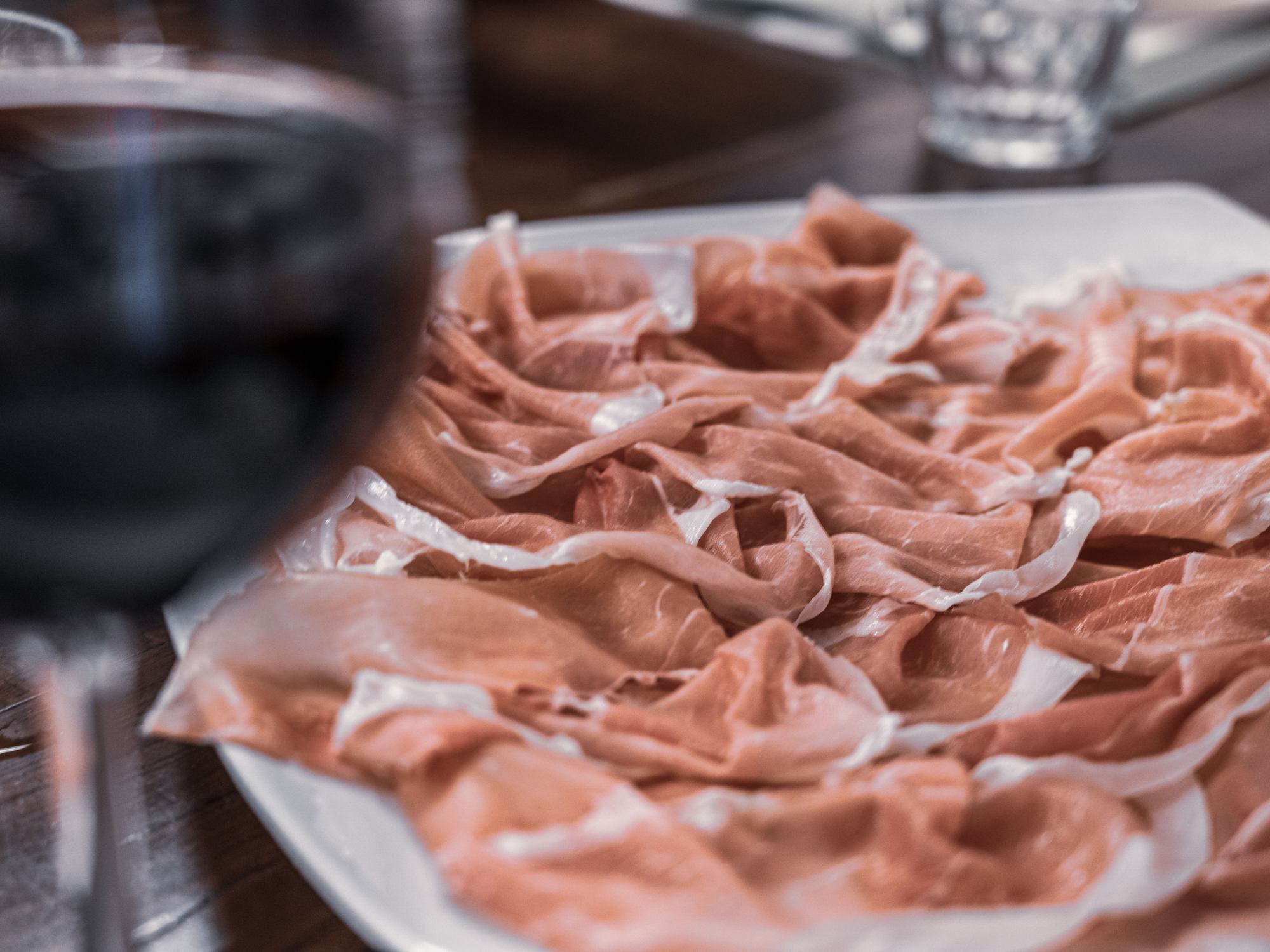
San Daniele ham: discover its ancient celtic origin
Have you ever wondered what makes San Daniele ham so special? This exquisite delicacy from northeastern Italy carries a story that stretches back thousands of years, rooted in ancient traditions and perfected through generations of craftsmanship. The origin of San Daniele ham begins with the Celts, who introduced innovative salt-curing techniques to preserve pork in the Alpine foothills. What started as a practical method of food preservation evolved into an art form, transforming simple ingredients into one of the world’s most prized cured meats.
Today, when you savor a slice of authentic San Daniele ham, you’re tasting centuries of culinary heritage. The unique microclimate of San Daniele del Friuli, nestled between the Carnic Alps and the Adriatic Sea, creates the perfect conditions for this time-honored process. From its Celtic beginnings to its protected designation of origin status, this ham represents the perfectmarriage of nature, tradition, and patience— qualities that resonate deeply with those who appreciate authentic experiences and genuine flavors during their travels.
Ancient Celtic roots: how salt-curing traditions began
The origin of San Daniele ham traces back to the Celtic populations who settled in the Alpine foothills centuries before the Roman Empire. These skilled communities understood the preservative power of salt, developing sophisticated techniques to cure pork that would sustain them through harsh winters. Archaeological evidence from the region reveals remnants of ancient settlements where pork was a dietary staple, and salt-curing was already practiced as an essential survival skill.
Why did the Celts choose this particular method? The answer lies in necessity and innovation. Without refrigeration, preserving meat required natural elements—salt drawn from nearby sources and the cool mountain air that circulated through their settlements. The Celts discovered that by massaging salt into pork legs and allowing them to dry slowly in controlled conditions, they could create a product that not only lasted months but also developed complex, savory flavors.
This wasn’t merely about survival; it was the birth of a culinary tradition that would define an entire region. The techniques passed down through generations became the foundation for what we now recognize as San Daniele ham. The Celtic approach emphasized patience, respect for natural processes, and an understanding of how environment shapes flavor — principles that remain central to authentic ham production today.
The medieval rise of San Daniele as a trading hub
As centuries passed, the small town of San Daniele del Friuli emerged as a strategic commercial center in northeastern Italy. The granting of market rights by the Patriarch of Aquileia transformed this humble settlement into a bustling trading post where merchants, nobles, and travelers converged. This official recognition wasn’t arbitrary—San Daniele’s position along important trade routes made it a natural gathering point for commerce.
The town’s prosciutto quickly gained recognition beyond local borders. Historical records reveal that San Daniele ham was considered a prestigious gift among nobility and church officials, offered during diplomatic missions and important celebrations. When religious councils convened, delegates specifically requested the ham from this region, consuming significant quantities during their gatherings. This wasn’t just about sustenance; it was about status and quality.
What elevated San Daniele ham above other preserved meats? The answer lies in the combination of inherited Celtic techniques and the town’s unique position. Local producers refined the curing process, developing the distinctive methods that set their product apart. The ham became so valued that even invading armies sought it out as a prized delicacy, recognizing its superior taste and quality. By the time the region joined the broader Italian kingdom, San Daniele ham had already established itself as a product worthy of European courts and discerning palates across the continent.
What makes the territory perfect for ham production
Have you ever wondered why certain foods can only be produced in specific places? The answer for San Daniele ham lies in an extraordinary convergence of geographical factors that create an irreplaceable microclimate. The town sits in a unique position where mountain breezes from the Carnic Alps meet warm currents flowing inland from the Adriatic Sea, just kilometers away.
This natural ventilation system creates ideal conditions for curing meat. The Tagliamento River flows nearby, adding moisture to the air in precise amounts that prevent the ham from drying too quickly or remaining too humid. The surrounding terrain, characterized by gravelly moraine soils left behind by ancient glaciers, contributes to the area’s distinctive air circulation patterns. These elements work together like instruments in an orchestra, each playing its essential part.
Temperature and humidity fluctuations follow predictable seasonal patterns that ham producers have learned to work with over generations. The natural aging rooms, with their strategically positioned windows, allow air to flow through in ways that modern climate control systems struggle to replicate. This isn’t about technology—it’s about understanding and respecting natural rhythms.
Production is restricted exclusively to the municipal territory of San Daniele del Friuli in the Udine province for precisely this reason. Attempts to replicate the process elsewhere, even just a few kilometers away, simply don’t produce the same results. The ham’s distinctive flavor profile, its tender texture, and its characteristic sweetness are inseparable from this specific place. It’s a perfect example of how terroir—a concept often associated with wine—applies equally to cured meats.
From artisan craft to protected designation of origin
The journey from local specialty to internationally protected product reflects centuries of dedication to quality and authenticity. For generations, norcini, traditional pork butchers, practiced their craft in San Daniele, passing knowledge from master to apprentice. Each producer developed subtle variations within the traditional method, but all shared commitment to fundamental principles: quality pork legs, sea salt, time, and the town’s unique air.
As production expanded and reputation grew, the need for formal protection became clear. How could consumers distinguish authentic San Daniele ham from imitations? The establishment of a consortium marked a turning point, creating unified standards while preserving artisanal methods. Producers agreed on specific requirements:
- Pork legs must weigh between specific ranges and come from authorized Italian regions
- Salt curing follows precise timing based on leg weight
- The distinctive guitar shape results from traditional pressing techniques
- Minimum aging periods must be respected, with all stages occurring within San Daniele
- Quality control includes physical inspection through needle testing
- Only hams meeting every standard receive the official mark
The Protected Designation of Origin status from the European Union formalized what local producers had maintained for centuries—that genuine San Daniele ham can only come from this specific place, made following these exact methods. This wasn’t about limiting production; it was about preserving authenticity in an increasingly globalized market. Today, just over thirty authorized producers operate within the municipal boundaries, each maintaining the artisanal approach that defines this exceptional product.
Why San Daniele ham remains a symbol of authenticity
In a world of mass production and shortcuts, San Daniele ham stands as a reminder that some things cannot—and should not—be rushed. The minimum aging requirement of thirteen months means that producers must commit resources and space long before seeing returns. This patience reflects a philosophy of quality over quantity that resonates deeply with those who value genuine craftsmanship.
What does authenticity mean in practical terms? It means that every slice of legitimate San Daniele ham connects you to centuries of tradition. The sweet, delicate flavor comes not from additives or accelerated processes, but from the natural interaction between quality pork, sea salt, and the town’s irreplaceable microclimate. The characteristic rosy color and tender texture develop gradually, as enzymes break down proteins and fats in ways that cannot be artificially replicated.
For travelers seeking authentic experiences, San Daniele ham represents something larger than a food product. It embodies the Italian concept of campanilismo—fierce pride in local traditions and territorial identity. When you enjoy this ham during a meal at a family-run establishment, you’re participating in a cultural heritage that values place, patience, and the wisdom of generations.
This commitment to tradition doesn’t mean resistance to progress. Modern quality controls and food safety standards coexist with time-honored methods, ensuring that today’s San Daniele ham meets contemporary expectations while maintaining its essential character. It’s this balance—respecting the past while embracing necessary evolution—that keeps the tradition vital and relevant for new generations of producers and appreciators alike.
Experience authentic Italian traditions at Hotel Astoria
Understanding the rich heritage behind products like San Daniele ham deepens your appreciation for Italian culinary traditions and the regions that preserve them. Just as this exceptional ham can only be created in its specific territory, authentic hospitality thrives in places where tradition meets genuine care.
At Hotel Astoria in Bibione, we’ve been welcoming guests with the same family warmth and attention to quality for three generations. Our restaurant celebrates the flavors of northeastern Italy, including regional specialties prepared with the same respect for tradition that defines San Daniele ham production. Every meal becomes an opportunity to discover authentic tastes in a welcoming, family atmosphere.